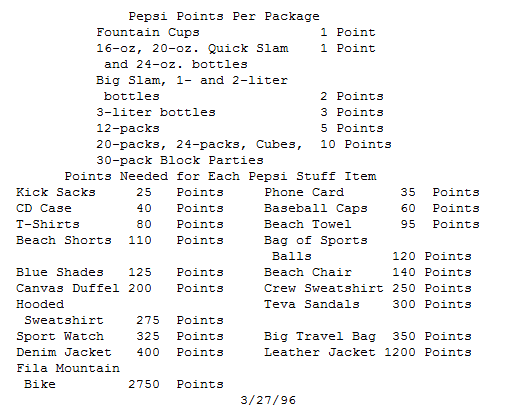
So this one hasn't done absolutely amazing on 101qs.com, but I think that the number of questions that line up together mean that I think we have a worthy entrance into the 3 acts database. The most interesting aspect of this 101qs is not so much the commercial itself, but the outcome of the commercial. The student that actually earned the number of Pepsi points to get the harrier and what happened to that. So let's check it out. Act 1 - The Prizes So when I was a kid and first saw this, I instantly wondered, how much Pepsi would it take to get that Harrier? Also I always wondered, "How much more will it cost to get the Harrier via Pepsi rather than just purchasing it?" Youmight notice that the new version of this video (based on some comments) that I blocked out the points so that students can come up with the number themselves. How could you offer this prize and still make a profit? Act 2 - The Deets A couple of ways I would do this is have students look up some of these items to get a general sense of price to point conversion. Then we can compare that to point to price in Pepsi. This task is more about making reasonable decisions rather than finding the exact correct answer. Act 3 - The Reveal I am a bit worried about this reveal, because being right is always so much more fun, but seeing this we can talk about how completely unreasonable this deal is. There is no way Pepsi would give away this kind of prize for so little. Enter the... Sequels The whole reason I choose this task is that a 21 year old student actually came up with the points necessary for the Harrier. These are some of the questions I would ask. - You are a lawyer for Pepsi, trying to show that this commercial is clearly a joke, and not a real offer. Prepare a statement for the judge.
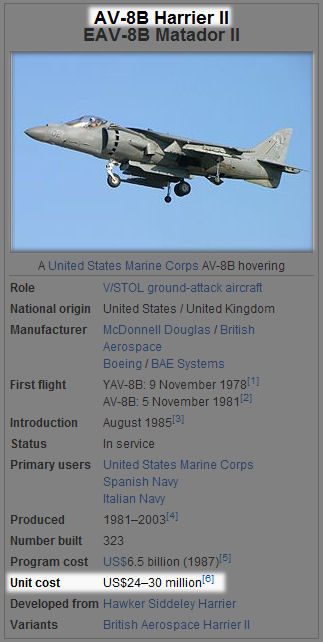
- What is the least amount of money that the 21 year old could pay for the Harrier, assuming he purchased bottles and cans to obtain the points?
- Pepsi offered a deal, that you could buy a point for 10 cents. How much could you get the Harrier for? (Yes this is an easy sequel for math teachers, but I know a few students that would have to think about it).
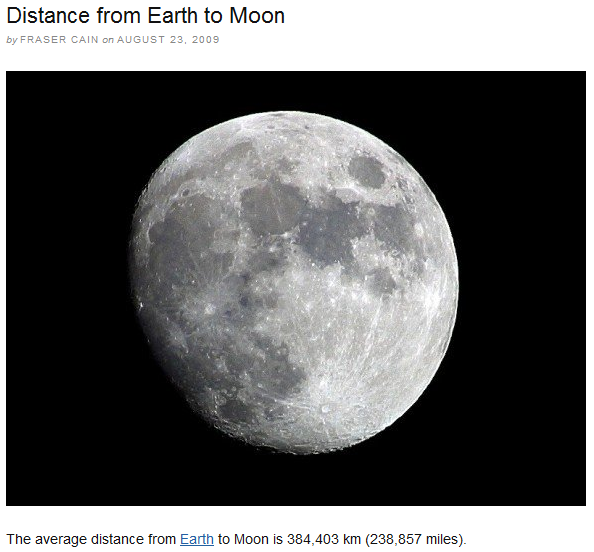
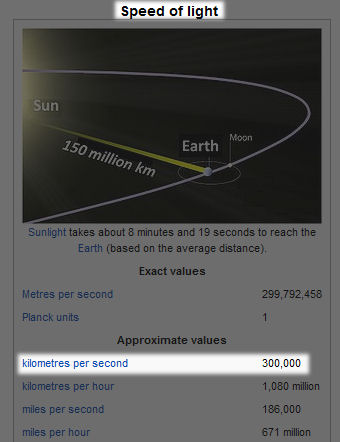
Like so many good things that I have created in life, this post comes entirely from someone else's idea. Dan Meyer had the first speed of light task, which I am linking for my sequel ideas, because, well, his just rock. I wanted to include this post, because I feel like I will be able to use this version a lot easier in my grade eight class, it allows talking about cool conspiracy, moon landing stuff, Mythbusters, and is practice for me taking something that I see and turning it into something I can use in class. Act 1 - The "Laser" I love this set up because it is what scientists actually did! They have reflectors on the moon at which you can shoot your lasers and receive signals back to prove that people were on the rock that is orbiting our Earth! Well, now all we need to know is how long did it take for the laser to to hit the moon and come back? Act 2 - The Measurements This act two is simple, I would probably use this for a started (shouldn't take too long at all), but here they are... Act 3 - Fire the "Laser!" Well there it is; a simple fun intro to the speed of light. Sequels As promised, Dan has some awesome work with the same problem, which can be found here. Check it out, you won't be disappointed.
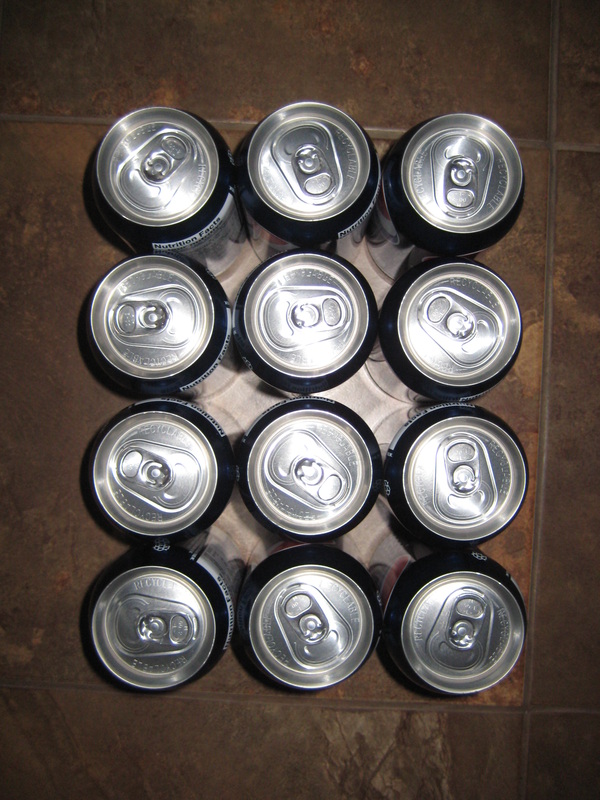
Ever wonder why companies make the decisions that they do? My wife and I drink more pop than I am willing to admit, and one thing I noticed while at the store is that the twelve packs of Coke and Pepsi do not have the same design. Let's look at them (warning I do not know if this works in the States). This is also a precursor to this lesson. Act 1 - The Boxes
I asked my students which one uses the least amount of cardboard, and in relation, which company made the best choice for the environment?
This was a good starter. I had kids talking about which looks bigger, and a trend over at least two classes (I'll see later on in the future), is that the majority of students say that Pepsi is the clearer waster, or they have equal amounts of carboard.
Act 2 - The Measurements
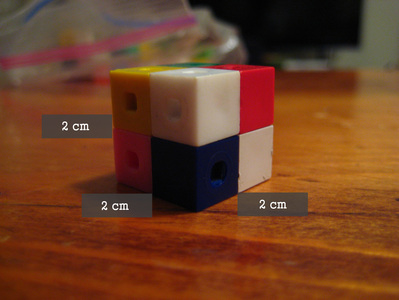
I ask students what do we need to know to solve this? Students came up with volume, area, dimensions etc. at which point I introduce them to our cm cubes.
We talk only a little bit about the difference between volume and surface area. In fact I do not use the words in particular, we talk only about "How many cubes are necessary to build this prism?" and "How many squares can we count on the outside?" an idea I lifted from Christopher Danielson. I gave students the following sheet and basically said, GO!  | surface_area_investigation.docx | | File Size: | 19 kb | | File Type: | docx | Download File
|  | surface_area_investigation.pdf | | File Size: | 198 kb | | File Type: | pdf | Download File
|
Here I talked to students a lot about short cuts. It was great when they said they had no short cuts, and I ask, "You just counted?"
"Yes," replies the student. I then proceed to count one-by-one each outside square. Before I can even get to three, the student interrupts and says, "No, no, no, you times the length by width for one side, then times it by two. You do this for three of the sides, since they each have an equal side" (paraphrased). Bwa ha ha! I laugh to myself, they have it, and I didn't have to write a single formula on the board!
Bringing it back to the pop box now only involves asking, what do we need to know to solve the pop box, problem. Students tell me they need the dimensions of the box so I give them these...
Act 3 - The Reveal
This is also a good time to have students talk about anything we are missing. My wife after a few days of seeing me make this asked about the overlap, and if that makes a difference, I haven't looked into it yet, let your students do it too! Sequel
- The boxes are designed with the following can configuriations...
How many different configurations can you find, and which one of these uses the least amount of cardboard? Do any of them use less cardboard than Pepsi and Coke's configurations? - Write a letter to one of the companies that explains your mathematics. Suggest for them why you think they should switch or keep their design.
Reflections and Moving Further
This was extremely engaging for one of my two classes. I think for me the pay out of the reveal is not as great as most of these 3act stories, so it can lose some students. I want to work on that out for next year. What else I need to do is to prepare more guiding questions to start off the investigation, so students can be invested in the problem earlier. They have not seen surface area before and so are not acquainted with it. Students knee jerk reaction at this age is to find volume (well actually they just say lxwxh without knowing what that means), so I want to guide them away from that. If they focus on volume to early on they count the problem off to early. What I really liked about this investigation was the next day when I wanted to teach them surface area of triangular prisms I handed them the nets, and asked what do we have to do now. Students quickly came up with the idea that we needed to find the area of each separate shape and them together. They knew the only formula they needed was to find the area of the triangle. We talked about the relation between rectangles and triangles. This was a fairly easy process, because students can see if you cut a rectangle down the diagonal it makes two triangles (therefore bh/2). This was a fairly simple review of the area of a triangle and extension of their learning of Surface Area. It was fantastic to see how quickly they adapted to the new information! Students were able to further adapt this to other nets that used basic shapes, and it was a very simple natural extension of the same logic (Thanks to Kate Nowak for the idea of nets and surface area). My only hiccup came with cylinders. I was ill prepared to lead students into a discovery of the area of a circle (technically they learned it last year... but they're only in grade 8), so I fell back onto lameness. I hope to alleviate the lameness, any suggestions? I have learned that great teaching comes from thinking through all aspects of the lesson and leading them through the inquiry. My cylinders lesson bombed, because I was lazy and had little prepared! I was humbly reminded how easily it has to slip into bad teaching, let's change that Timon!
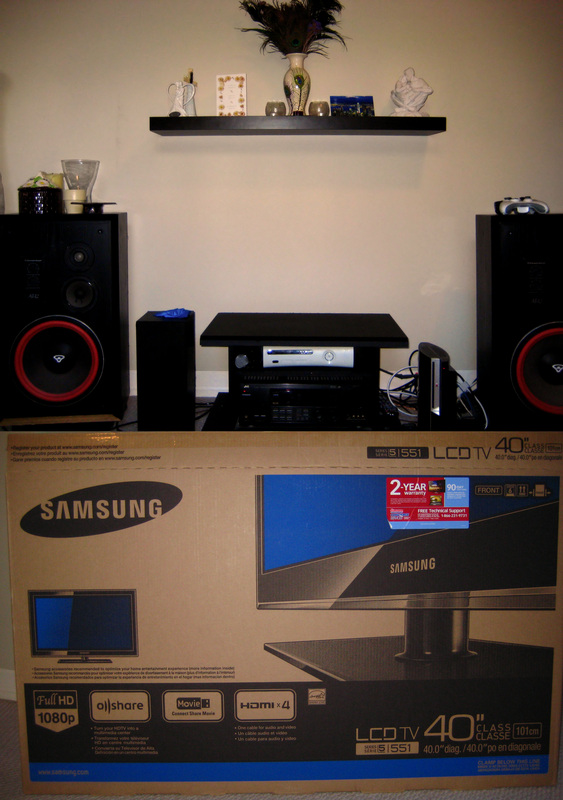
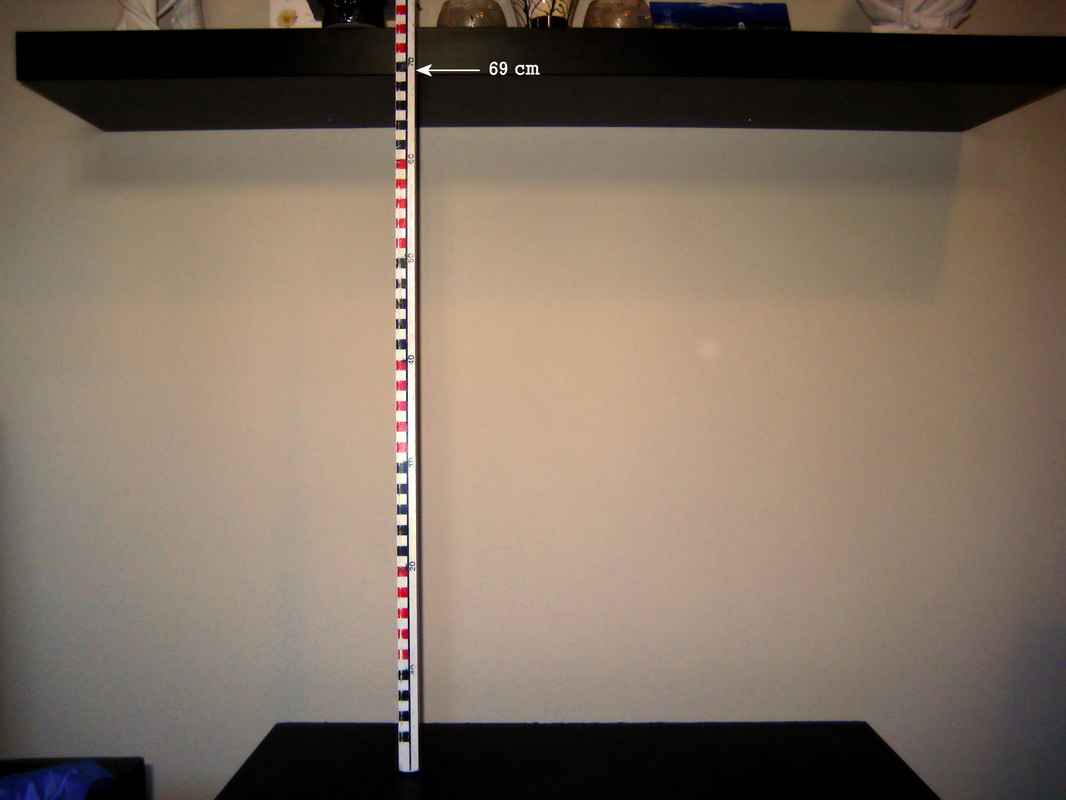
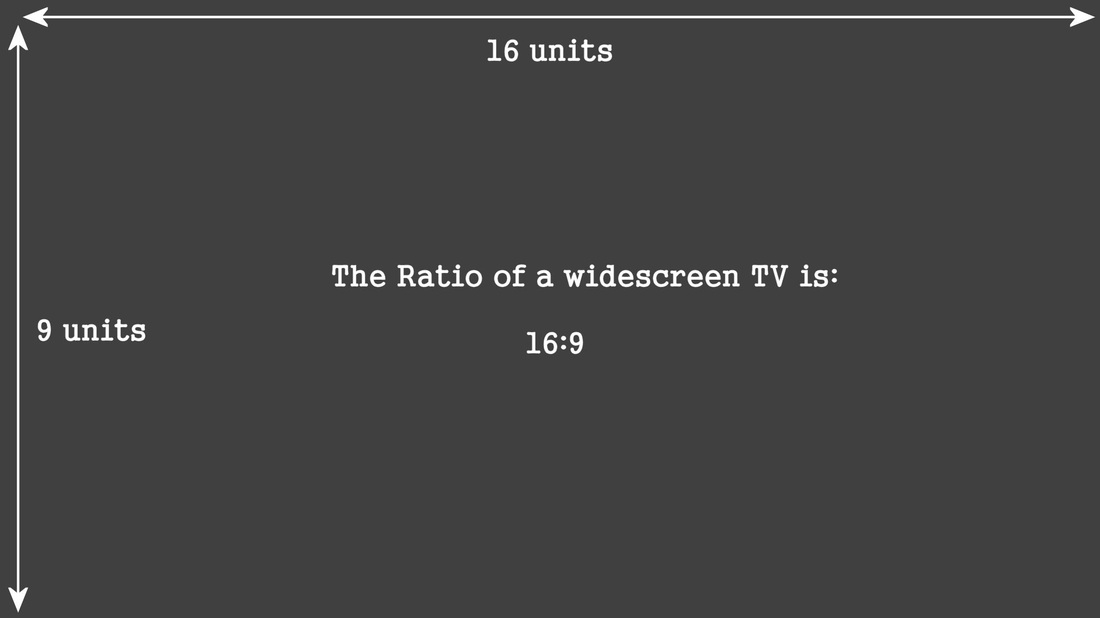
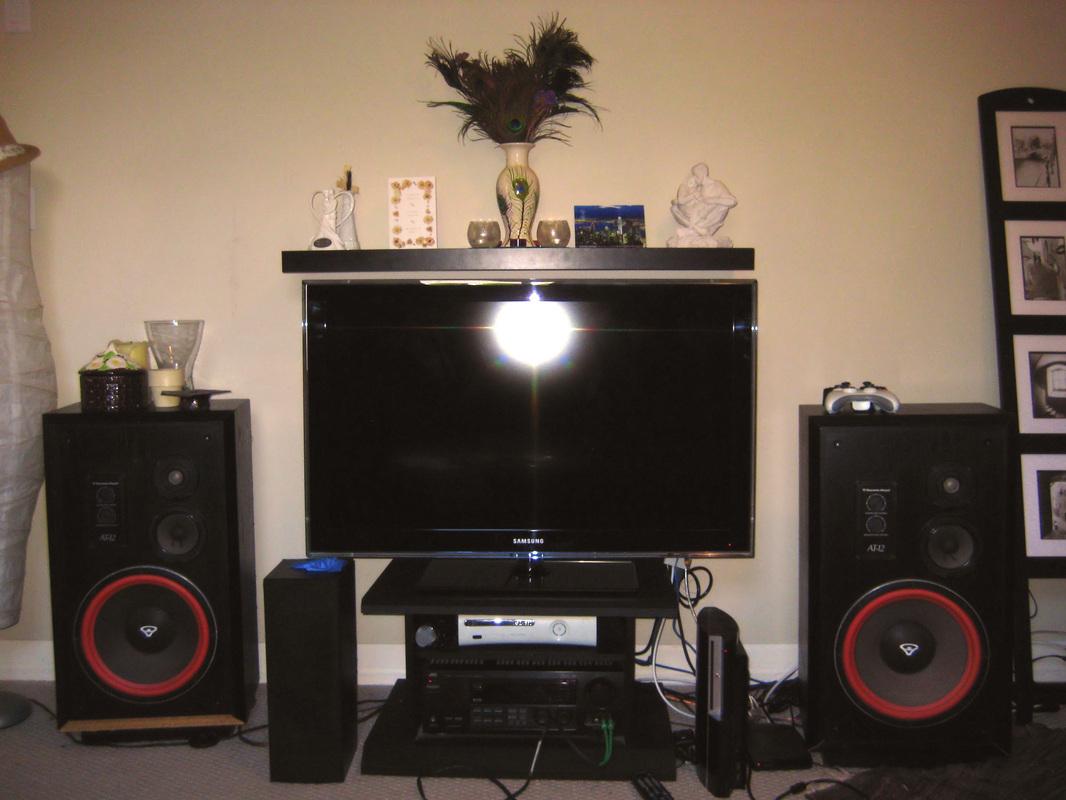
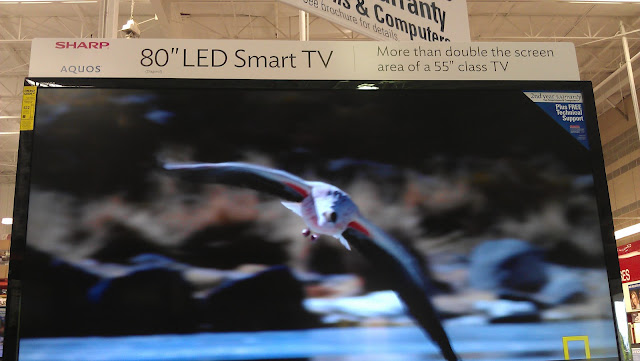
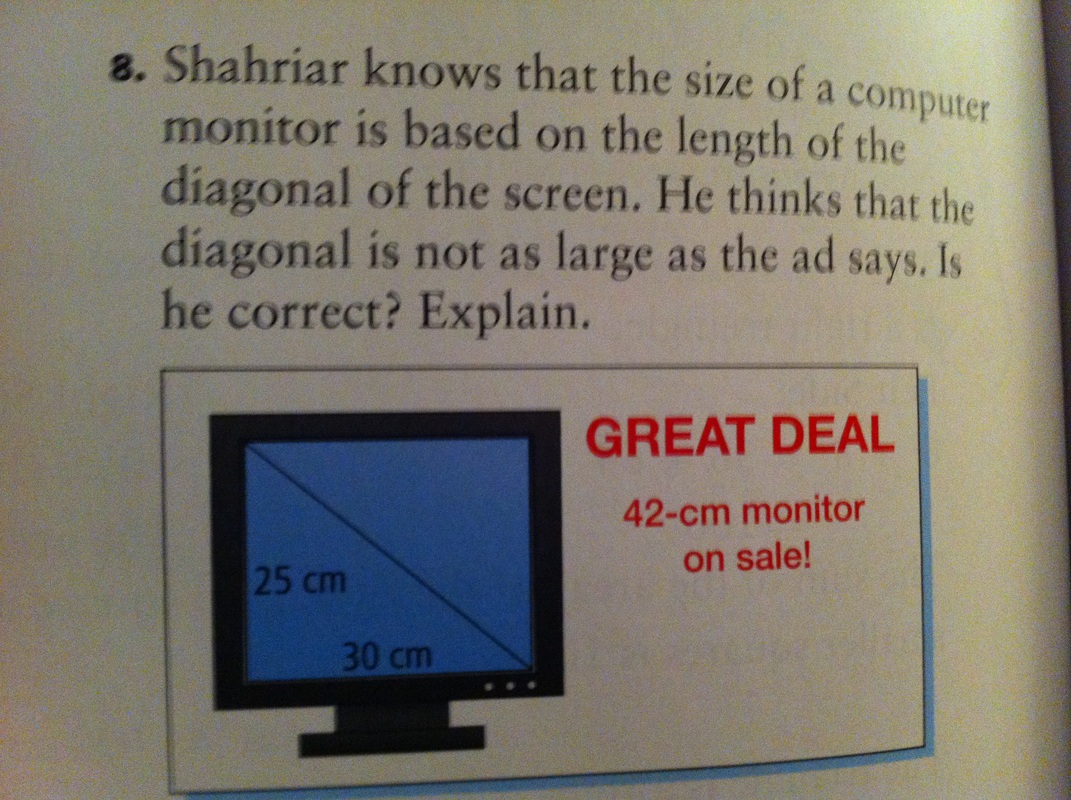
I am learning more and more about how this whole problem based learning shtick works, and I have to say I love it. Today was an example of how much I love it, and how worthwhile it is. I have been struggling to motivate the use of the Pythagorean Theorem in a natural way so that students can jump in. Enter Mr. Piccini's Summer Purchase... Act 1 - My Living Room I started off the "story telling," by discussing how it was time for my wife and I to upgrade our T.V. I showed them the picture and asked them: "What problems do you think I may run into?" I realised after that this was a little too much of the "Guess what is in the teacher's head" but the question was so natural they needed to ask "Will the TV fit under the shelf?" We talked about what it meant for a TV to be 40". Almost half the class knew that it meant the diagonal. I asked what do we notice about the shape of a TV is when cut down the diagonal. Clearly there were two triangles, and thus began our exploration. Act 2 - Exploring the Pythagorean Theorem For the next part I stole the great investigation from Dan Meyer found here. This worked so well it was unbelievable. Students were very quick to see the relationship between the sum of the small areas and the large area. Students enjoyed the manipulative nature of this exploration, and the result was clear and accessible to the students. We did some practice and then came back to my T.V. the next day. We started the next day with whiteboards, and I had students write what information we knew and what information we needed to know. I reinforced to students that I did not want to renovate my wall because I am lazy, but I am not too lazy to move my speakers. They said then that we needed to know the height to the shelf. So I gave them this... Depending on how hard you want to make this problem you can do either cm or inches. Inches is the easiest. Since students recognized that we need information on the diagonals, we need to talk about what a good diagonal measurement would look like for this space. For that I broke out geogebra, to show students how sizing TV's looks. I used these two geogebra apps. We talked about what the different shapes of TVs look like, and what your average wide screen would look like. Using the geogebra animations the students discussed how the proportions always stay the same. At which point we could talk about ratios. At this point students needed guidance on how to find the dimensions of the space, but it came quite naturally to talk about the largest possible TV that I could fit in my living room. Students found that this was a 55" TV, and as it turns out... Act 3 - The Reveal Sequels (Updated May 27, 2012)
If you don't believe in collaborating online via blogging etc. let this section be a testament to this. Neither of these extensions were my own thoughts, they were completely lifted from others, awesome!
- From Karim in the comments there is also this: "What is the largest standard TV (4:3) that could fit in this space?
Online collaboration for the win! Reflections This was such a simple execution, but it gave the students a real challenge, and a real-world application to try from the get-go. I had a debrief with my students in one class, and they said they loved how visual, real, and engaging it was. I never expected to hear that. The only complaint was from students that finished really quickly. I was not ready with sequels, and in fact, I still can't think of any. I never thought that this specific problem would have as much engagement as it did, but once students got rolling they were hooked. All in all I was happy today, and I sure beat the socks off this version of the problem.
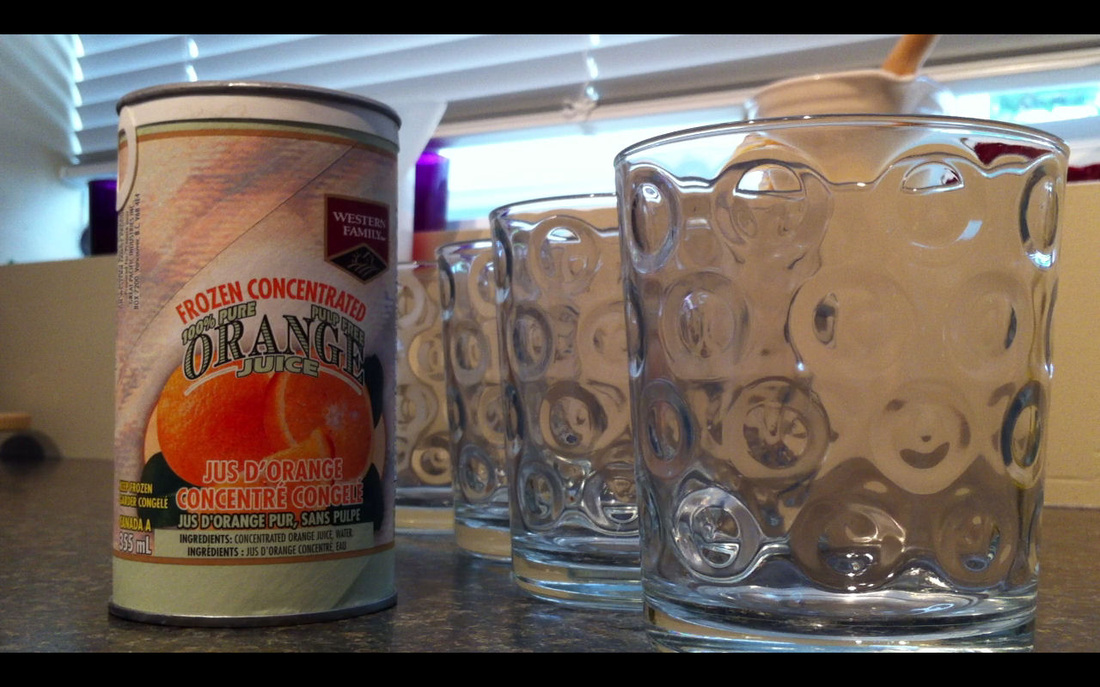
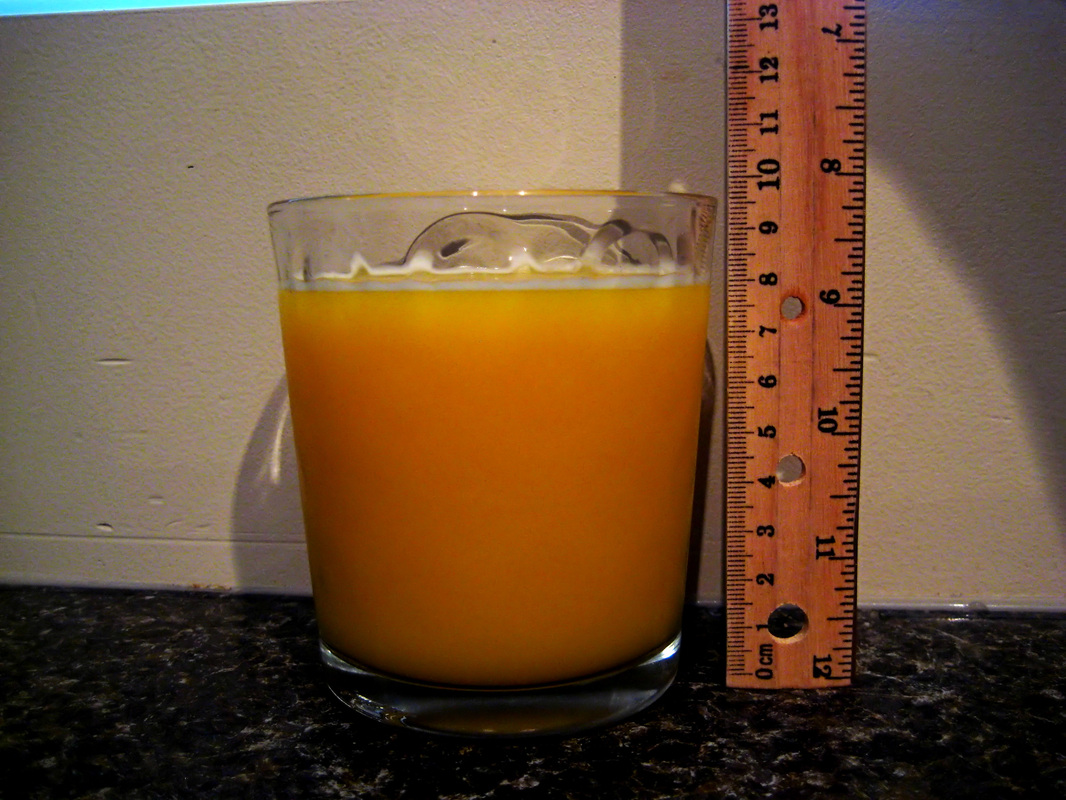
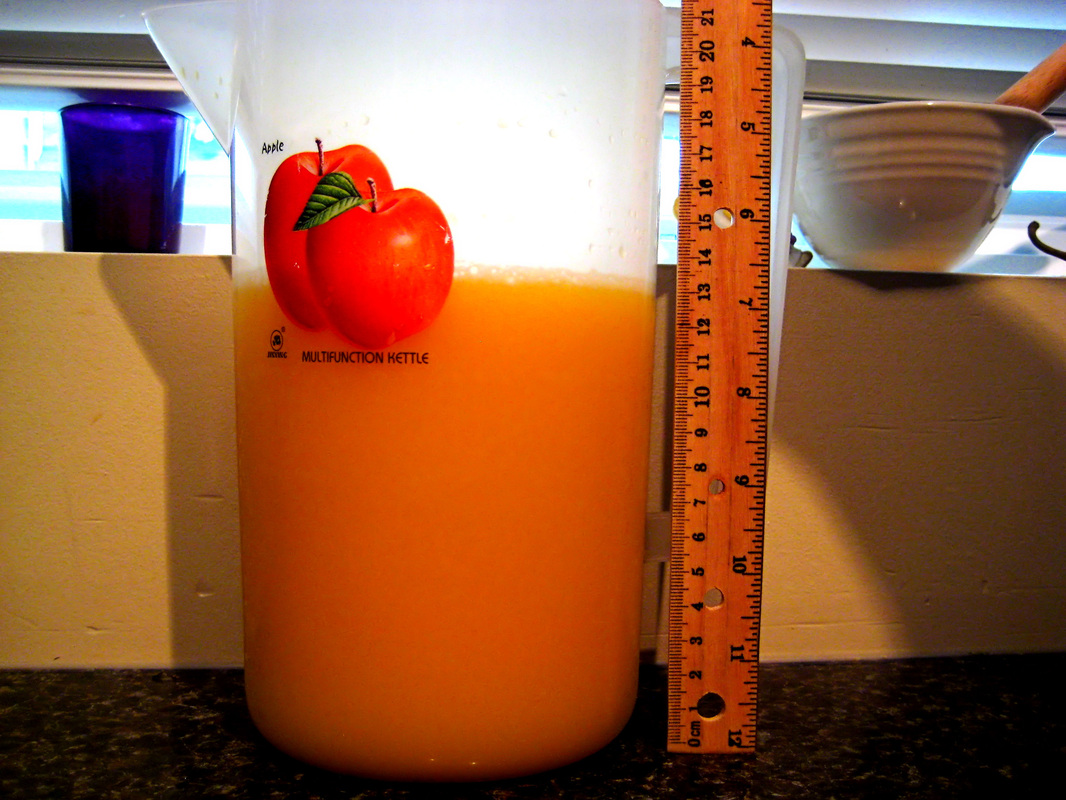
So, I am kind of on a binge right now with my 3 act posts, but I have had this one for awhile and I have not posted it, but after reading this comment on Dan Meyer's blog I decided I should put this up as a possible elementary level 3 acts lesson. Here it is.... Act 1 - Mmm Juice.... I have a goofy little set up for this, where I say I'm making drinks for my friends, do I have enough? Ask them what they think? If so how many glasses do you think I can fill? Give me a number that is too high and a number that too is small. Ask your students what information we need to know. Then we are on to Act 2 (and here is where the differentiation comes in... Act 2 - Measurements (Grades 4-6?) Act 2 Measurements (Grades 8-10) If you want students to find the volume of each of these containers you can use these pictures to do the trick (jump-high-five for differentiation!). Act 3 The Reveal Sequels - How many cans of juice do I need to give one cup of juice to the whole class? To the whole school?
- How big of a container do I need to hold all the juice for the whole class? The whole school?
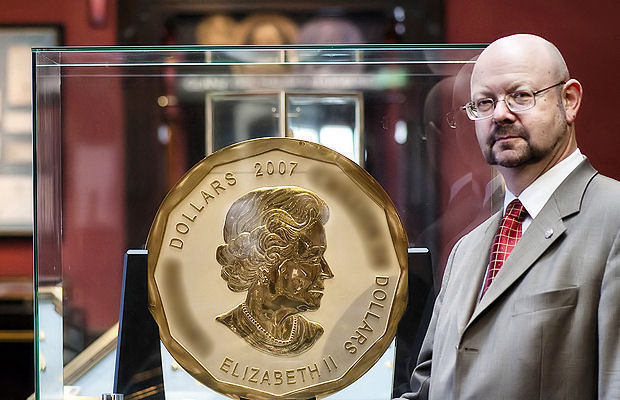
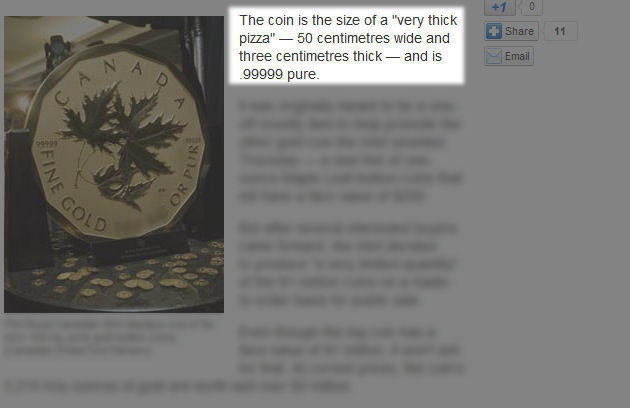
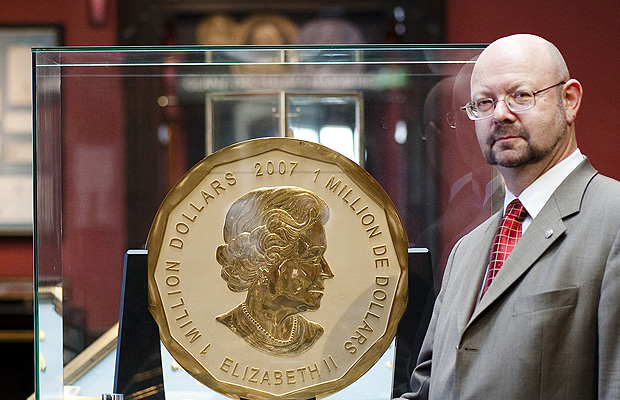
When it comes to anyqs, I find that the ones that interest me the most are the images or videos that blow my mind by sheer scale. A seven wonders of the world sort of deal rings deep within my soul, and so I offer you MEGACOIN! Act 1 - The Coin HOLY CRAP THAT IS HUGE! Here is where I would ask "How much is this coin worth?" Let students ask questions. I am debating if I want to let them know it is made of pure Gold or should I let them follow any rabbit trail they want. They'll probably guess it's gold. Act 2 - The measurements There is a lot that goes on with this one. We have volume, density, rates, ratios, it is all fantastic! Act 3 - The Reveal And the final answer is... The Sequels I have actually been able to think of a few cool sequels based on this (which makes me happy since this is the hardest part for me). - What could the dimensions for a true million dollar coin be? A billion dollar coin? A trillion dollar coin?
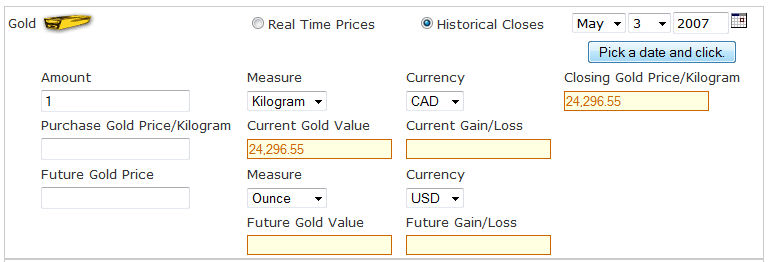
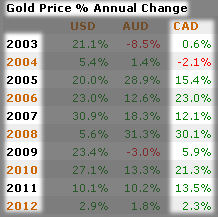
- Using the following chart, how much would this coin be worth today? Did the people that bought these make a good investment?
I have a penchant for dinosaurs and monsters that roamed the Earth millions of years ago. I still remember sitting in the theatre when I was six years old to see Jurassic Park. I remember the first moment that I saw the Brachiosaurus in that movie and ever since I was hooked! I have never grown out of that. Watching Jurassic Park still makes me giggle like a school girl. When I see things like quake circles in glasses of water, and the piercing cry of the velociraptors, my heart soars!. Suffice to say when I first learned of something called the Megalodon I was hooked. Here are my 3 acts.
Act 1- Say "Ahhh!"
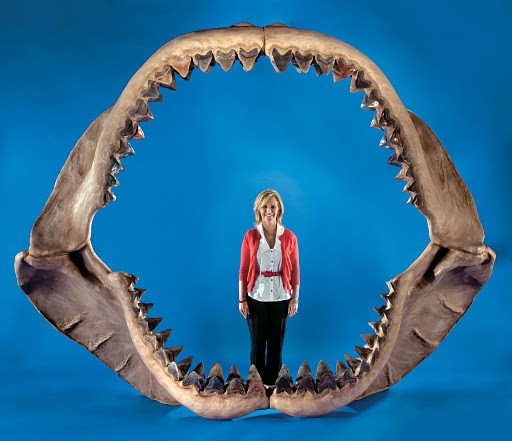
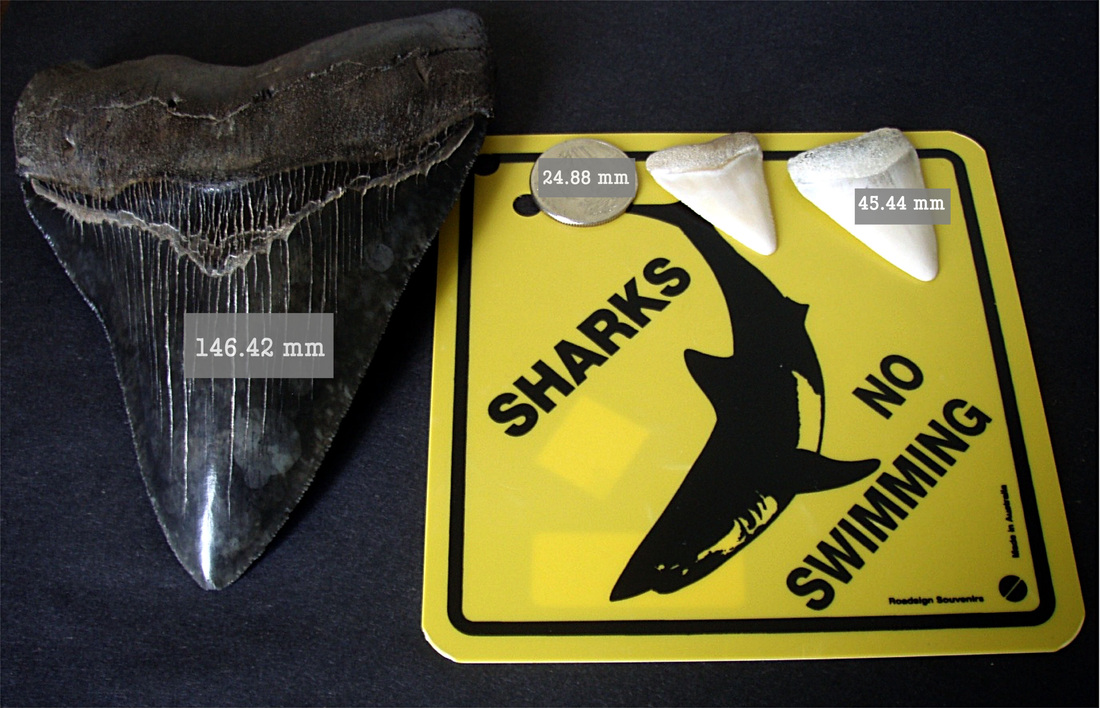
Megalodon was a shark: a really really big shark. What is different about finding remains of a shark than say that of a Tyrannosaurus is that a shark is mostly cartilage. That means that scientists mostly only get to find jaws and teeth.
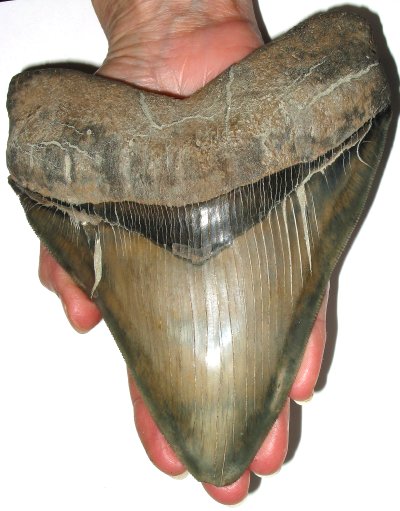
So I want to ask students: "If you found a tooth this size, how big would the shark be?" *Side note for extra awesome go buy a replica on ebay!* Get guesses, draw pictures! Give them a grid to show scale between you and the size of the shark, all in the name of awesome! Guiding Questions
- If we know this is a shark what is the next step that we should take?
- What sharks could we compare it to?
- Which shark looks most like Megalodon's? Check here maybe.
- How can we compare the sizes of these teeth?
- How does that affect the shark's size?
Act 2 - The Scientific Process
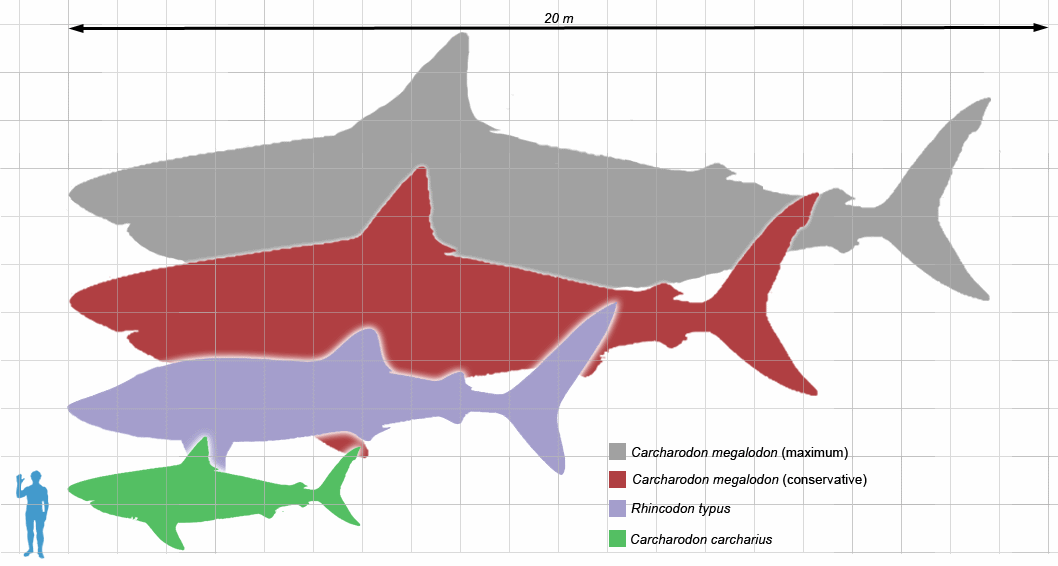
Now experts recognized that this is a shark tooth by comparing it with one of the fiercest sharks around. The Great White shark actually shares much the same characteristics as the Megalodon. Hopefully students will recognize that if we have identified it as a shark tooth that we can compare it to these sharks. This is where some comparison pictures come into play.
Students now can make some educated guesses, and we can talk about what are some good methods for estimating Megalodon's size.
Act 3 - The Reveal
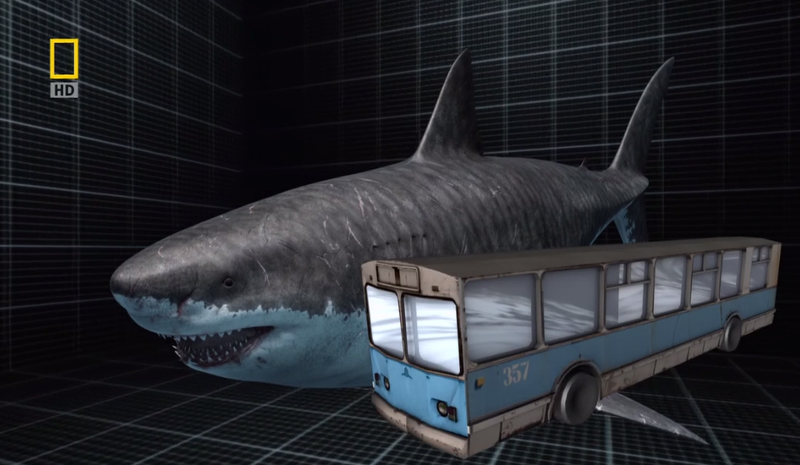
The first estimations were done very simple proportional reasoning, which gives us the overestimate. At this point I might have students measure out on a string how big the Megalodon actually is!
Sequels
There are a few sequels that come to mind. - Given a length of a shark, draw the size of its tooth.
- Experts thought that assuming a directly proportional relation was not accurate measurement. Some experts (Gottfried et al.) found the following information to create a formula that predicts the size of a shark. Use the information in this table to find the equation, and use it to make a new estimation of our Megalodon's size.
| Tooth Size (cm) | Shark Length (m) | | 2.5 | 2.2 | | 3.8 | 3.4 | | 5.1 | 4.7 | | 6.4 | 5.9 | Well tell me what you think! I am so excited about this, but will it translate? What do ya think?
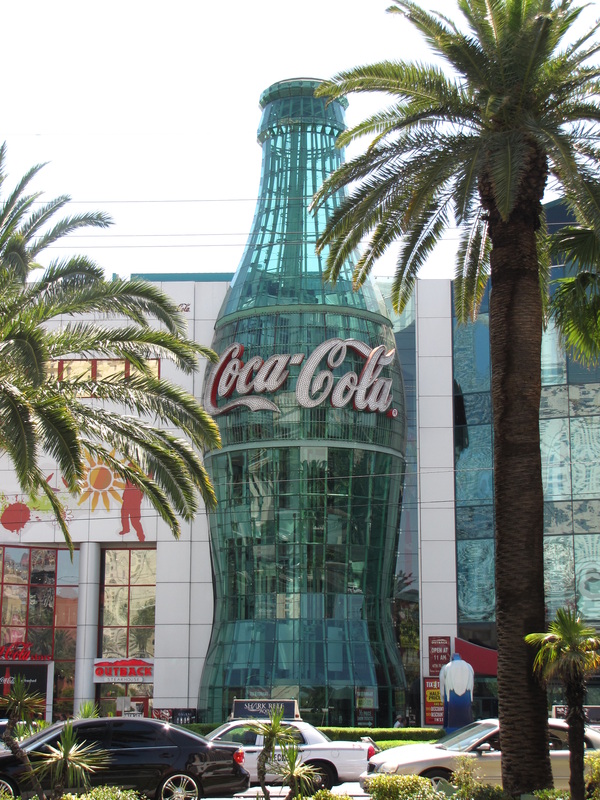
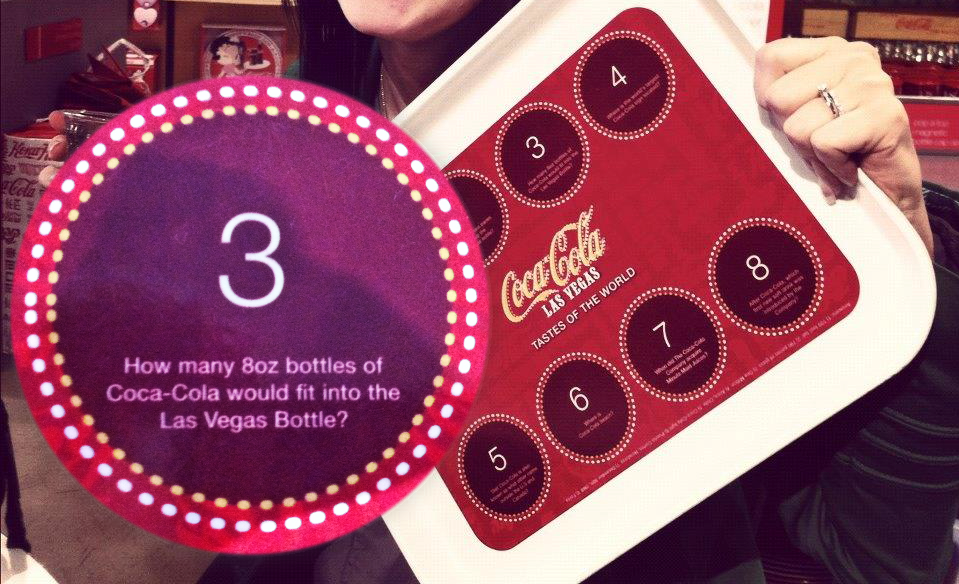
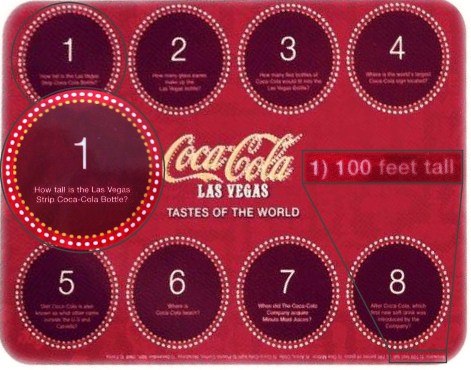
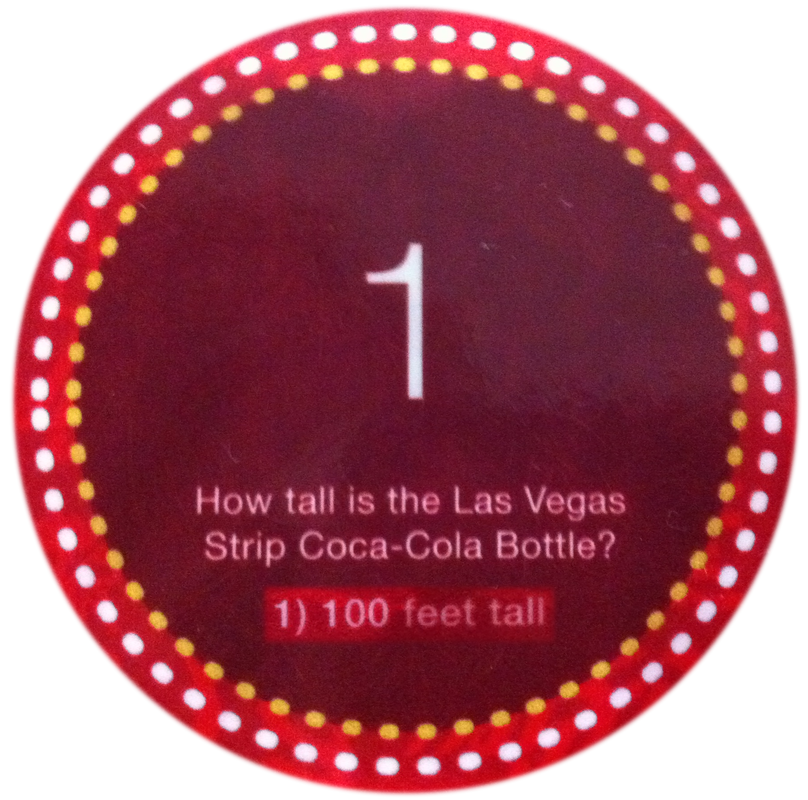
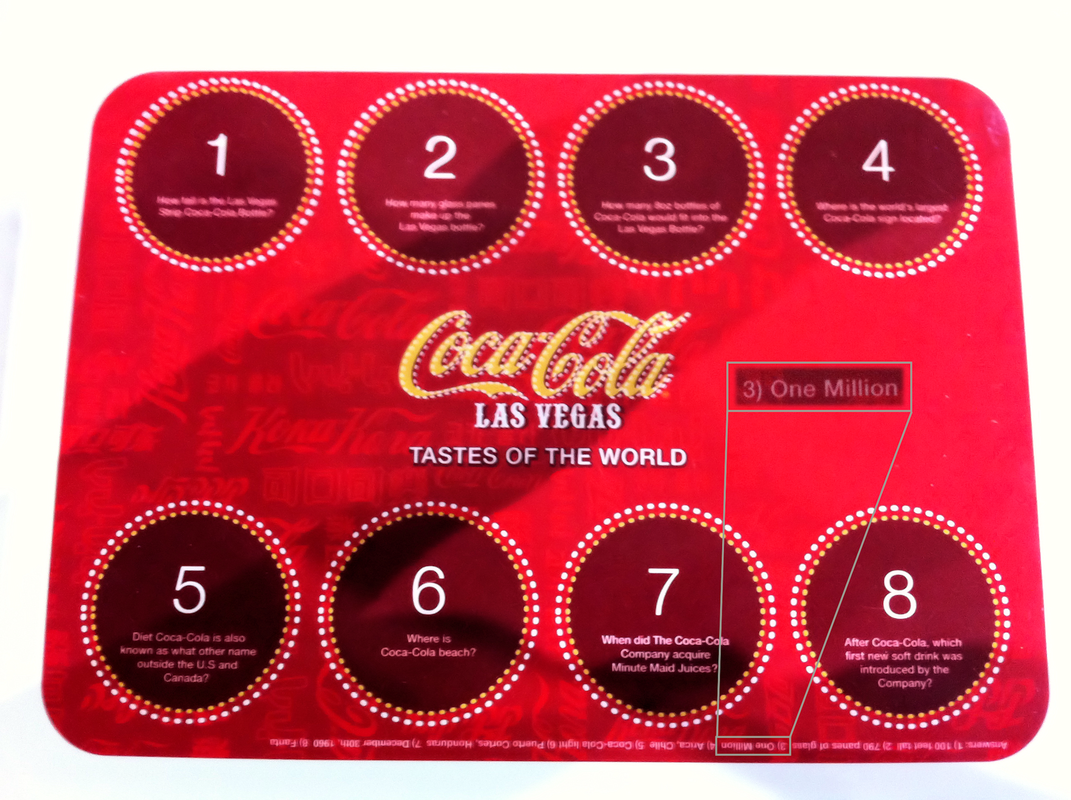
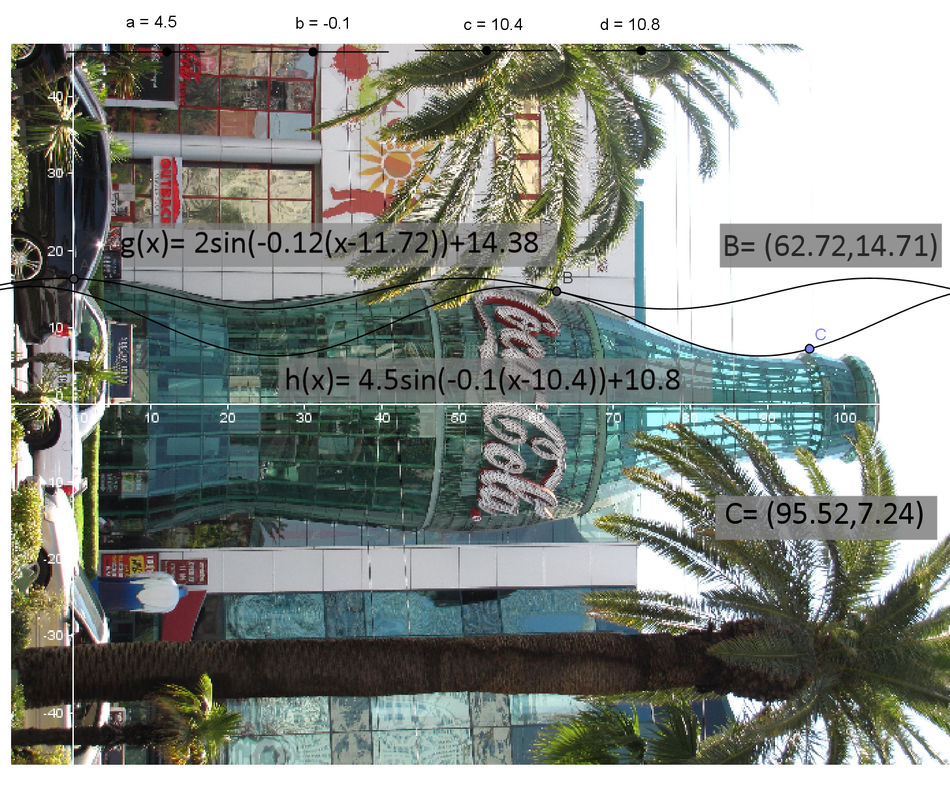
So apparently I really like pop as you can see here and here. Before we begin I feel I have to let you know my teeth are not rotting, and I do not have a coke addiction, okay clear? So here's what you came for Act 1 - The Really Big Bottle! This is the Coca Cola store in Las Vegas Nevada, and when we went in for a drink, we were pleased to read the trivia on our drink tray. This is what we found. Score! Act 2 - Measurements The trivia tray also had some vital information for our cause, here it is. I was trying to figure out the best way to edit these images. I would like to here some critique of my design, to try to find out what looks best, but this is my attempt. The way I saw solving this was to map some function to the coke bottle, and use our lovely calculus to find the volume by rotating, so I developed a bare bones Geogebra app with sliders and the picture to find a sinusoidal function that would work (an assumption I made, too much for students?). I wonder if this should be an Act 2 artifact or if students should come up with this themselves. Act 3 - Reveal As I am sure you have seen these sorts of answer reveals on trivia trays, they have the answer flipped upside down, and once again, I am not sure of the best way to present this reveal. So here are my two copies of the reveal. Possible Solutions As I already stated I used rotation to find the volume, then I had to convert to ounces, and then divide by 8. With GGB I found these equations and these points. And I allowed wolfram to do the rest  | solution_-_coca_cola.pdf | | File Size: | 244 kb | | File Type: | pdf | Download File
In wolfram it converts it to "ounces" but the final answer is really number of 8 ounce coke bottles, and with a number greater than 6 million, I think I can say that we need to have a talk with the math coordinator at Coca Cola Las Vegas. (Assuming I used my math right, could you guys check that for me?) Sequels I can think of only a few... - Create a scale picture on GGB (using either a cylinder, or a sphere from the front, or a bottle) to show the true size of 8,000,000 ounces.
- If we could fill this coke bottle with 8,000,000 ounces, how full would the bottle be? Did the "math coordinator" account for coke bottles having air?
- How much would it cost to fill a coke bottle this large? How much would it cost a consumer to buy that much Coca-Cola?
And without further ado the complete package zip file.
Well here it is! One of my best moments of stumbling onto curriculum. I would first and foremost like to thank Delano Pauw. He is the creator of all the media and the toppling artist; I just happened to find him on youtube. Check out his channel. He really is amazing, and with a quick e-mail he gave me Raw footage, dimension shots, and estimates. All from way off in the Netherlands (this interweb thing is so cool!). Without Further Ado, here is the domino spiral (now featuring sound). Act 1 - The Spiral
Based on twitter results the most natural question to ask is how long will it take for all the dominoes to fall? That is what this WCYDWT is based on.
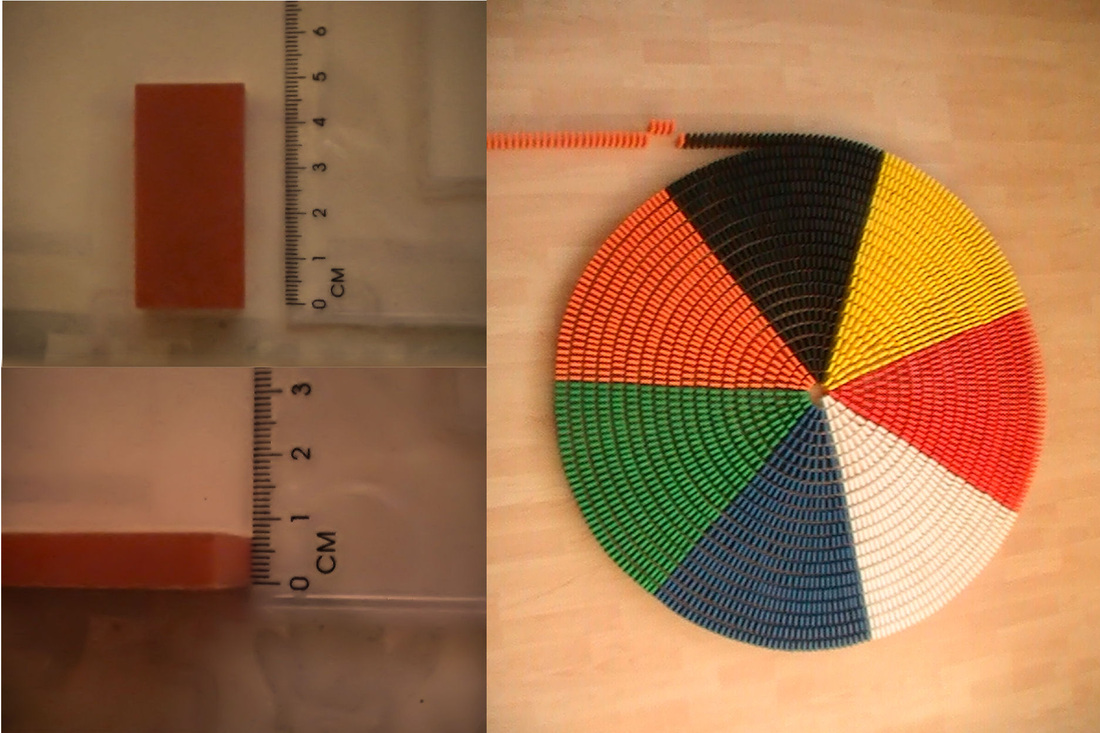
Act 2 - Dimensions and Time Measurements
So here it is, I wanted to make students work for the dimensions a bit. Is this too mean? Anyway these work well!
I will give students a printed copy of the picture from which they can gather the dimensions. Then play the first lap of the spiral to have students get the rate of fall. If you want to make this whole process longer give them dominoes instead of the video and have them come up with the rate of fall from experimentation. If you are physics minded throw this in their face. I am pretty sure I don't understand a single thing in that pdf, but I haven't taken the time to go through it, but it could give some neat extensions. Act 3 - The Reveal
Here it is, the moment we have all waited for!
Sequels and Extensions
This is the part that I find the hardest. Where can this lesson grow legs. Please give me a hand with making this more worthwhile, but here are some ideas that I have so far. - How many dominoes of each colour?
- Graph the time of each revolution vs. its radius, find the slope (I don't actually know if this is worthwhile I haven't tried it).
- Switch the variables around and find some bigger domino topples, ask them how many dominoes were used.
They are kind of lame, but like I said I cannot think of any. Delano did speak about the calculations that he had to go through in creating this, maybe he can comment about that, and an extension could be that kids make their own (I am all about building these as a project). Guiding Questions
One spot where I am a total n00b when it comes to inquiry and teaching is my question techniques. I want to learn good leading questions that prompt students just enough to get them over hurdles. If you guys could give me some in the comboxes that would be excellent! Here is my start. - What are we trying to solve?
- What unit will it be in?
- What would make our final time longer or slower?
- How can we determine how fast the dominoes are falling?
Once again, no skills here so I need your help. Enjoy.
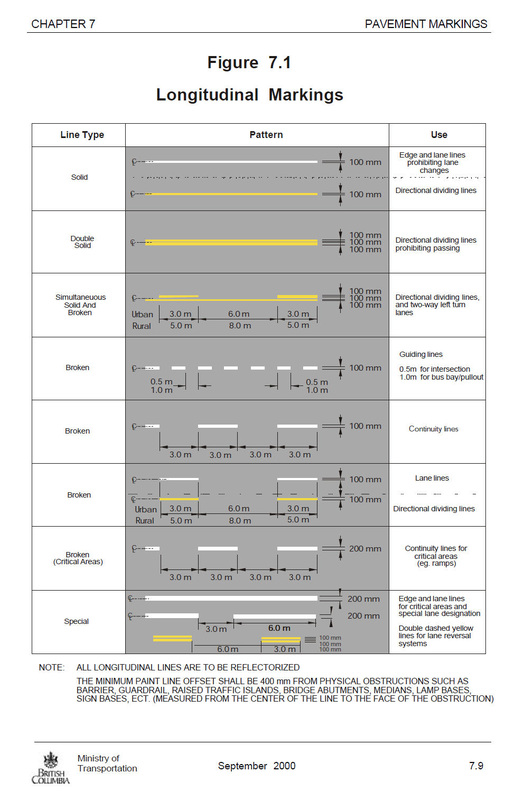
Listening to Dan's talk on iTunes has makes me really want to post this, because this is the one problem that actually caught my curiosity. I was driving home one day, noticing these nice dotted lines on the highway as I came home. I wondered what I could do with it, and so I made my carpool friend drive home one day...
Act 1 - Roadlines
I especially like this, because I feel like it is the "wizardry" of mathematics, something so innocent, could tell someone so much.
Act 2 - Measurements
Some other very vital information is what is the distance. Well if you are from the US of A (do americans actually say that?), you can use this great article, just keep in mind my video is shot in Canada (so Km/h), or as my Blair Miller helped me find you can use this resource for British Columbia... Or just pull out Google Earth and measure, that mother is pretty precise.
Act 3 - the Reveal
And there it is. I feel as if I may have cheated you guys out of the reveal, just doing the picture in picture. Would have been better show me pull in the camera onto the dashboard? What do you think?
The Sequels
Where I could see this going is A) develop the general case for m/s to Km/h. Or better yet lines/sec to km/h (MPH if you are a friend of Uncle Sam (do Americans ever say that? I need to get cultured)). For some reason I feel like this would be a sweet app, have students make it. I also thought of bringing in movies, car chases, to see how fast they are really going. This one even mentions some of the speeds in the intense Bullitt car chase. How else could I extend this? I don't know, but I think my grades should have fun with it...
|