So this is my new lesson/starter activity. I plan on using this to get kids thinking about volume again, and my future goals for this lesson will be elaborated further down. Anyway this all started when I was thinking about the recent trend in twelve pack boxes for pop. They use to be 3x4 and now they are 6x2. My students had a lot of problems this year with Surface Area (mostly due to me), and I thought this would be a great way to introduce it by buying some, and asking the question, "Which box is better for the environment?" I liked the idea and, so I was stuck thinking about pop.
I went shopping with my dad last weekend (we were home for a family event) and there were these new "100 calories" Coca Cola Slim packs and I grabbed out my phone and snapped some picture (Dad looked at me funny he is not used to this side of me yet). Anyway I walked down the aisle, and found the new Pepsi slim cans! But they were a different shape, but same price! Boo ya! Math lesson here I come. Anyway I bought those as fast as I can, and this weekend I went to town. I'll present this once more in Mr. Meyer's three acts since I appreciate the narrative...
I went shopping with my dad last weekend (we were home for a family event) and there were these new "100 calories" Coca Cola Slim packs and I grabbed out my phone and snapped some picture (Dad looked at me funny he is not used to this side of me yet). Anyway I walked down the aisle, and found the new Pepsi slim cans! But they were a different shape, but same price! Boo ya! Math lesson here I come. Anyway I bought those as fast as I can, and this weekend I went to town. I'll present this once more in Mr. Meyer's three acts since I appreciate the narrative...
Act 1 - Any Questions?
Act 1 - Cola Sleek from Timon Piccini on Vimeo.
A nice simple video, and Twitter has quickly shown (not from hundreds of people), that I was on track with my question. Students will ask questions about the video, and share them on the board. I am anticipating that students will either inquire about volume or surface area, both tracks I am willing to head down.
Act 2 - The Measurements
Here I have two streams for this part. I would say this is my differentiation. I took two pictures in order for measurement and context. The first is the two cans (not the tucans! Guffaw!) compared to a standards sized 355mL can (12 fl oz.? I don't know standard measurement very well).
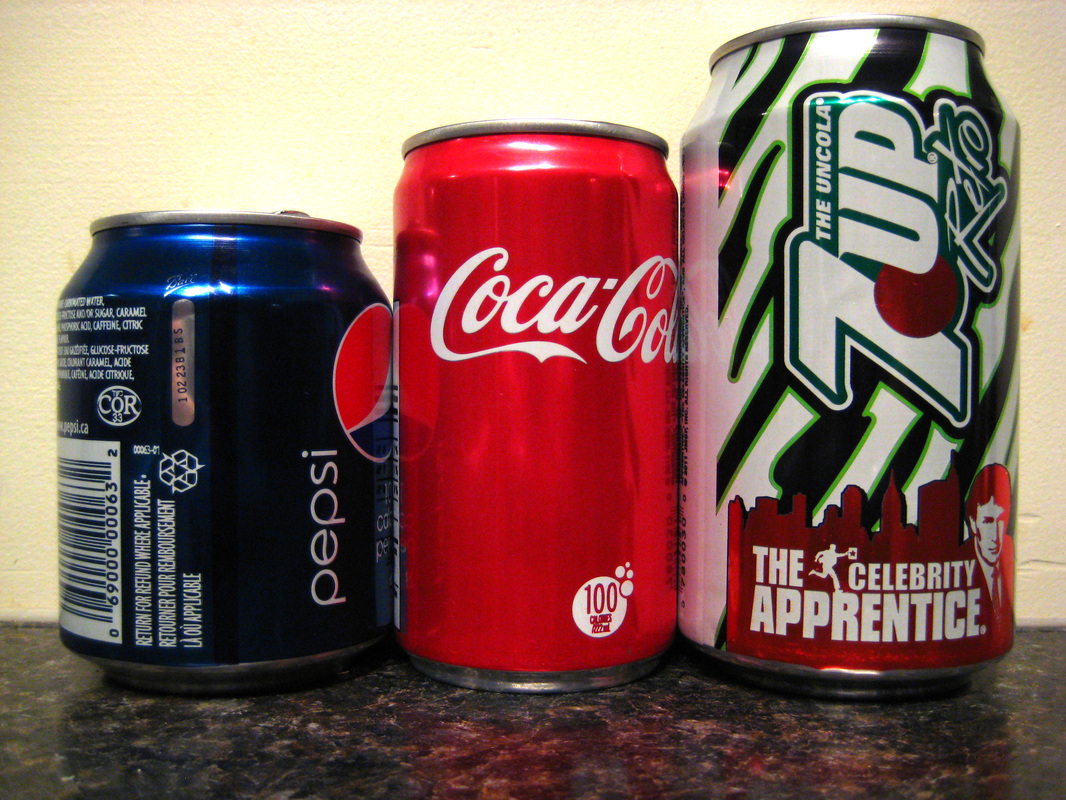
I also get the added street cred of having the 7-up retro can from the Apprentice. Not available in Canada! Yay for smuggling!
I predict that some of my students will be able to figure out the measurements just from this picture, but to make it more clear for some students (and since this year I just want it as a review piece) I am also including this picture.

It is so boring without Zebra print.
Kids can now have at it! At least for the review they have already been "taught" the formula for volume of a cylinder, but I know I did not teach it very well. This is the part where I would like to hear in the comments, how middle school students (12-13 years old) can develop a concept of the volume of a cylinder (more specifically the area of the circle), anyway that is for another day.
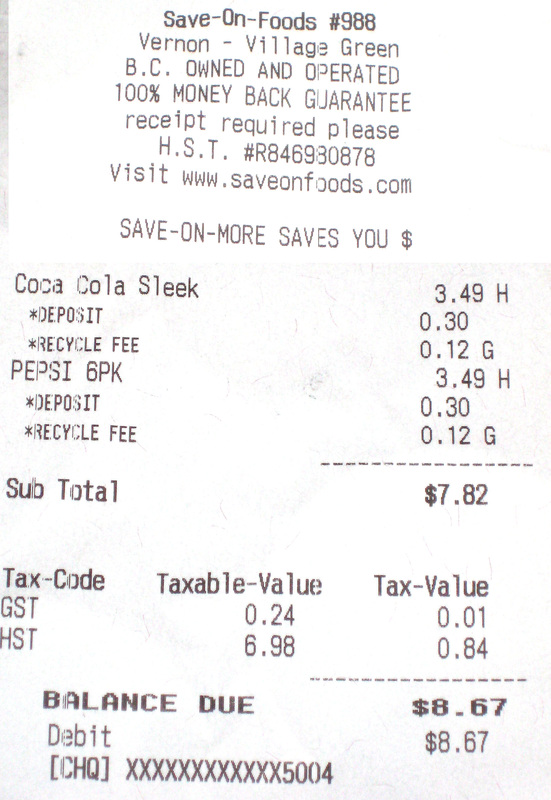
And one more image just in case they ask.
Act 3 - The Reveal
Act 3 - Cola Slim from Timon Piccini on Vimeo.
Don't watch the video if you want to try it for yourself. I had hoped that just the visual would give away the answer, and it does if you look really closely, but I had to show the cans without the blur to really hit the point home. I really like how this turned out, because it get's so much across, and may even cause a discrepant event (I think I would assume that the coke can has more volume, or that they are equal judging by the price).
The Sequel
This is where I see all the future potential. We can have small discussions about the easy questions.
But where I really want to go is with my original thought. Have pop companies chosen the most environmentally friendly can? Can we maximize the the volume and surface area of both the can and the box? Do we have to sacrifice one for the other? Obviously you could do this in a calculus class by actually doing max min problems, but I figure with just a table of values I can have my grade eight students graph, and introduce them to a relative minimum surface area.
I don't know the answers to these questions either, that's what intrigues me. I feel like either the box could not match the can or vice versa, then we can get into a discussion about which is better for us to use more of cardboard, or aluminum?
Then throw in two litre bottles! Really I could just see this going on forever, what do you guys think? You are my veterans.
P.S. I do need to give a nod to some of my inspiration for this from the "Teaching Mathematics in the Middle School" article here is the reference.
Carmody, Heather Gramberg. Water Bottle Designs and Measures. Dec. 2010/Jan. 2011, 272–77
- Why do they say 100 calories? Is the pop actually healthier?
- In a pack of six how much more pop do you get with pepsi? Can of 12? Pack of n?
- What is the price per mL of Coke compared to Pepsi?
But where I really want to go is with my original thought. Have pop companies chosen the most environmentally friendly can? Can we maximize the the volume and surface area of both the can and the box? Do we have to sacrifice one for the other? Obviously you could do this in a calculus class by actually doing max min problems, but I figure with just a table of values I can have my grade eight students graph, and introduce them to a relative minimum surface area.
I don't know the answers to these questions either, that's what intrigues me. I feel like either the box could not match the can or vice versa, then we can get into a discussion about which is better for us to use more of cardboard, or aluminum?
Then throw in two litre bottles! Really I could just see this going on forever, what do you guys think? You are my veterans.
P.S. I do need to give a nod to some of my inspiration for this from the "Teaching Mathematics in the Middle School" article here is the reference.
Carmody, Heather Gramberg. Water Bottle Designs and Measures. Dec. 2010/Jan. 2011, 272–77

